The Geology Under Your Home: Clay and Shale in the Mohawk Valley
If you live in Utica, your home sits on some of the most challenging soil in New York State. The Mohawk Valley is underlain by thick deposits of glacial clay and shale bedrock that have been shaping local construction problems for generations. Unlike sandy or gravelly soils that drain quickly, clay particles are microscopic and tightly packed, which means water moves through them very slowly. When it rains or snow melts, that water has nowhere to go but against your foundation walls.
Shale adds another layer of complexity. This layered rock expands and contracts as moisture levels change, and it can soften when exposed to water over long periods. The result is a soil profile that is constantly on the move, swelling after wet spells and shrinking during dry summers. That cycle of expansion and contraction puts steady pressure on foundation walls and footings, and it is one of the primary reasons so many basements in the region develop cracks and leaks. Understanding this local geology is the first step toward protecting your home.
How Clay Soil Causes Utica Foundation Cracks
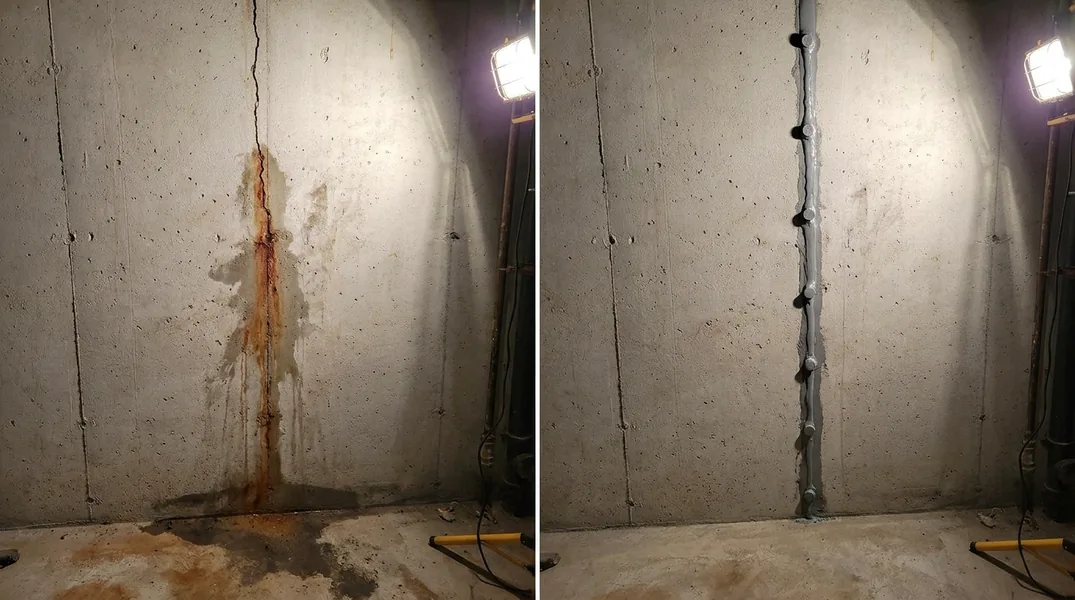
When clay soil absorbs water, it can expand by as much as 10 percent of its original volume. That expansion creates what engineers call hydrostatic pressure, a relentless force that pushes against your foundation walls from the outside. Most residential foundations were not designed to resist that kind of sustained pressure, especially older homes built before modern drainage standards were common. Over time, the walls begin to bow, crack, or shift, and once a crack forms, water finds its way in.
The opposite problem happens during dry periods. Clay shrinks as it dries, leaving gaps around your foundation and creating voids that allow the soil to settle unevenly. This is why you often see diagonal cracks near the corners of basement walls or stair-step cracks in block foundations. These are classic Foundation Waterproofing warning signs, and ignoring them usually leads to bigger problems. If you have noticed any of these patterns, it is worth having a professional take a look before the next heavy rain season arrives.
Why Basements Leak: The Water Path You Cannot See
Most basement leaks do not start with a visible puddle. They start with water seeping through microscopic pores in concrete or masonry, long before you notice dampness on the floor. Clay soil makes this worse because it holds water against your foundation for days or weeks after a storm, giving it plenty of time to find weak points. Cracks, cold joints, and the seam where the floor meets the wall are all common entry points. In many New Hartford and Whitesboro homes, the problem is compounded by downspouts that discharge too close to the foundation or by grading that slopes toward the house instead of away from it.
Once water is inside, it does not just make a mess. It raises indoor humidity, which can lead to mold growth, musty odors, and damage to stored belongings. Over time, repeated wetting and drying can also weaken the concrete itself. The key takeaway is that clay soil basement leaks are rarely a one-time event. They tend to get worse, not better, which is why early intervention matters so much.
Solutions That Work for Mohawk Valley Soil Movement
Because the problem starts outside, the most thorough fix is often Exterior Basement Waterproofing, which involves excavating around the foundation, sealing the walls, and installing a drainage system that redirects water away from the house. This approach addresses the source of the pressure rather than just the symptoms. For homeowners who want to avoid major excavation, an Interior Drain Tile System can be an effective alternative. It captures water that enters the basement and channels it to a sump pump, keeping the space dry even when the soil outside is saturated.
In some cases, a combination of approaches works best, especially in older homes where the foundation has already sustained some damage. A professional assessment can determine whether cracks need structural repair, whether drainage improvements are sufficient, or whether a full Basement Waterproofing system is the right investment. The goal is always the same: keep water away from the foundation and give it a controlled path away from your home. For homeowners in Yorkville and the surrounding communities, the right solution depends on the specific soil conditions and the age of the structure.
Basement Waterproofing Near Me: When to Call a Pro
Some homeowners can handle minor surface sealing on their own, but the clay and shale conditions in the Mohawk Valley usually call for a more engineered solution. If you are seeing water on the floor after heavy rain, efflorescence (white powder) on the walls, or cracks that seem to be widening, it is time to bring in a professional. These are not cosmetic issues, and DIY fixes like hydraulic cement or paint-on sealers rarely last more than a season in this kind of soil.
A qualified contractor will inspect the foundation, evaluate the drainage around the house, and recommend a solution that matches your specific situation. At Utica Waterproofing, we have worked on hundreds of local homes and understand how the local soil behaves. If you are searching for basement waterproofing near me and want a straight answer about what your home needs, call (315) 864-5045 or request a free estimate. We will walk you through the options and help you understand what is happening beneath your home.
Basement Waterproofing Cost in Utica: What to Budget
Homeowners often ask what waterproofing will cost, and the honest answer is that it depends on the scope of the problem. A simple crack injection might be a few hundred dollars, while a full interior drain tile system or exterior excavation can run into the thousands. Factors that affect pricing include the length of the foundation, the severity of the damage, the type of soil around the house, and whether structural repairs are needed. In the Utica area, clay soil often means more extensive work than you would need in a sandier region.
The best way to get an accurate number is to have a professional evaluate your foundation in person. We provide detailed, no-pressure estimates so you can plan your budget with confidence. Remember that postponing repairs usually costs more in the long run, especially when water damage leads to mold remediation or structural repairs. Investing in the right solution now protects your home's value and your peace of mind for years to come.
Looking for a professional basement waterproofing contractor in Utica? Utica Waterproofing responds fast for all your basement waterproofing needs.
Get a Free QuoteOur services: Basement Waterproofing · Interior Drain Tile System · Exterior Basement Waterproofing