



Basement Mold Remediation in Utica: Fix the Moisture, Then the Mold
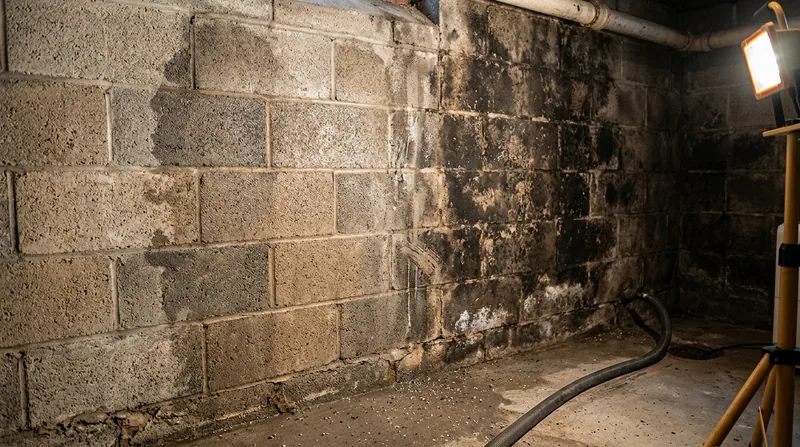
If you are searching for Basement Mold Remediation in Utica, the musty smell in your Cornhill or Harbor Point basement is telling you something specific: moisture is getting in and staying in. The Mohawk valley floor sits on glacial lake clay and silt over Utica shale, so water moves slowly and presses hard against stone and early block foundation walls. Spring snowmelt and high water on the Mohawk push the water table up, and deep freeze-thaw cycles work on foundations every winter. Mold needs damp building materials, and in this city the damp almost always starts below grade. We treat the affected surfaces and then fix the water path so growth does not come back. Start with a free basement inspection so we can find the source before anyone sprays anything.
Why Basement Mold Grows So Fast in Utica's Old Brick and Stone Basements
The housing stock here explains most of the problem. Cornhill, Bagg's Square and Harbor Point are full of 1890s to 1920s brick two-families, foursquares and Victorians with hand-dug full basements and stone or early block walls. Those walls wick groundwater and hold it. New Hartford and Whitesboro Capes and bungalows from the 1920s to 1950s often have partly finished lower levels where drywall and framing sit close to damp block. Yorkville and Oriskany ranches and split-levels from the 1950s to 1970s have poured or block lower levels that crack and seep. The outer-town subdivisions have poured full basements that stay damp when the sump pump fails or the discharge line freezes.
- Efflorescence on the wall is the white salt line that shows water is moving through the masonry.
- Hydrostatic pressure from glacial clay soil pushes water through cracks, tie holes and the wall-footing joint.
- A failed sump pump or a frozen discharge line leaves the floor wet for days, which is enough time for mold to start.
- Warm interior air hits a cold foundation wall in winter and condenses, feeding mold even when no water is visible.
- Clogged or collapsed weeping tile at the footing lets water sit against the wall instead of draining away.
Treating the mold without correcting one of these conditions only buys time until the next wet spring.
Key info: A two-family on a low corner in Cornhill can show a white salt line on the stone wall every March while the basement stays dry all summer. That is not a mold problem you can scrub away. It is groundwater moving through the masonry, and it needs drainage or sealing work, not just a cleaning.
For the official word on mold and moisture in buildings, the EPA mold guidance is a plain-spoken reference worth reading before you hire anyone.
How We Handle Basement Mold Remediation in Utica Homes
Our process starts with the moisture, not the bleach. We walk the basement, read the walls for efflorescence and seepage, check the sump basin and pump, and look at grading and downspouts outside. Then we set up containment, remove or treat affected materials, and correct the water path. The goal is dry building materials and a basement that stays dry through the spring melt.
- We inspect the basement and identify the moisture source, including wall seepage, floor seepage and sump failure.
- We set up containment and negative air so spores do not spread to the rest of the house during work.
- We remove porous materials that cannot be saved and treat affected framing and masonry surfaces.
- We correct the water path with drainage, sealing, a vapor barrier or dehumidification as the inspection shows.
- We verify dryness and give you a clear picture of what to watch for in the next wet season.
When the inspection shows water coming through the wall-footing joint, an interior drain tile system is usually the better answer than exterior excavation, especially on a hand-dug stone foundation where digging outside is risky and expensive.
Key info: A partly finished basement in New Hartford had mold on the lower drywall and a musty smell every April. The cause was a failed sump pump and a discharge line that froze at the foundation. We replaced the pump, rerouted the discharge, removed the wet drywall and treated the framing. The basement stayed dry through the next snowmelt.
Remediation Approaches We Use in Utica Basements
Not every basement needs the same treatment. A small patch of surface mold on a block wall in Yorkville is a different job from a finished lower level in Clinton with wet framing and a failed drain tile. The table below shows how we match the approach to the condition.
| Approach | Description | Best for |
|---|---|---|
| Surface treatment and cleaning | Containment, removal of loose growth, and treatment of affected masonry and framing. | Light surface mold on block or poured walls with a known, correctable moisture source. |
| Drainage correction | Interior perimeter drain, sump basin and pump work to move water away from the wall. | Hydrostatic pressure and water at the wall-footing joint, common on old stone foundations. |
| Wall sealing and crack repair | Epoxy or polyurethane injection for cracks, plus wall sealing to reduce seepage. | Isolated cracks and damp walls where the water path is clear and limited. |
| Vapor barrier and dehumidification | Vapor barrier on walls and floors, plus controlled dehumidification to dry the space. | Condensation-driven damp in finished basements and humid summer conditions. |
| Sump and backup upgrade | Sump pump replacement and battery backup to keep water out during storms and power loss. | Basements that flood when the pump fails or the power goes out during a summer storm. |
Basement Mold Remediation Cost in Utica: What to Expect
Most basement mold remediation jobs in Utica start at $1,500, and that figure covers containment, removal of affected materials and treatment of the surfaces. The number moves up with the size of the affected area, whether the basement is finished, how much porous material has to go, and how much drainage or sealing work the moisture source requires. A small patch on an unfinished block wall in Oriskany is at the low end. A finished lower level in New Hartford with wet framing and a failed sump can run several times that. We give you a written scope so you can compare line by line, and we tell you plainly when simple crack sealing is enough and when the real problem is hydrostatic pressure.
Get two or three estimates and make sure each one names the moisture fix, not just the cleanup. A quote that only treats the mold is a quote for the problem to come back. Our pricing overview shows how the numbers break down.
Basement Mold Remediation Near Me: How to Vet a Contractor Near Utica
You want a contractor who works below grade every day, not a general cleaner with a sprayer. Ask for proof of licensing and insurance, ask what the moisture source is and how they plan to correct it, and ask for references from jobs in Utica, New Hartford or Whitesboro. Permits are commonly required for structural foundation repair and for work that alters drainage or the sanitary connection of a sump discharge, and thresholds vary by jurisdiction, so call the local building department to confirm what your job needs. Get everything in writing, including a transferable warranty on the work. Reach out through our contact page to schedule a look.
Basement Mold Remediation in Utica: Pricing Guide
| Service | Price | Details |
|---|---|---|
| Surface mold treatment | Starting at $1,500 | Containment, removal of affected material and treatment of masonry or framing surfaces. |
| Remediation with drainage correction | Starting at $2,800 | Includes interior drain work or sump correction plus surface treatment of affected areas. |
| Finished basement remediation | On estimate | Needs an on-site look because drywall, framing and insulation removal varies widely. |
| Travel | Included | In Utica and surrounding areas, no separate call-out or mileage fee. |
| Estimate | Free | Response within 24h at (315) 864-5045, no obligation to book. |
Indicative pricing, the exact cost depends on square footage, finish, and site access. Free personalized estimate within 24h at (315) 864-5045.


